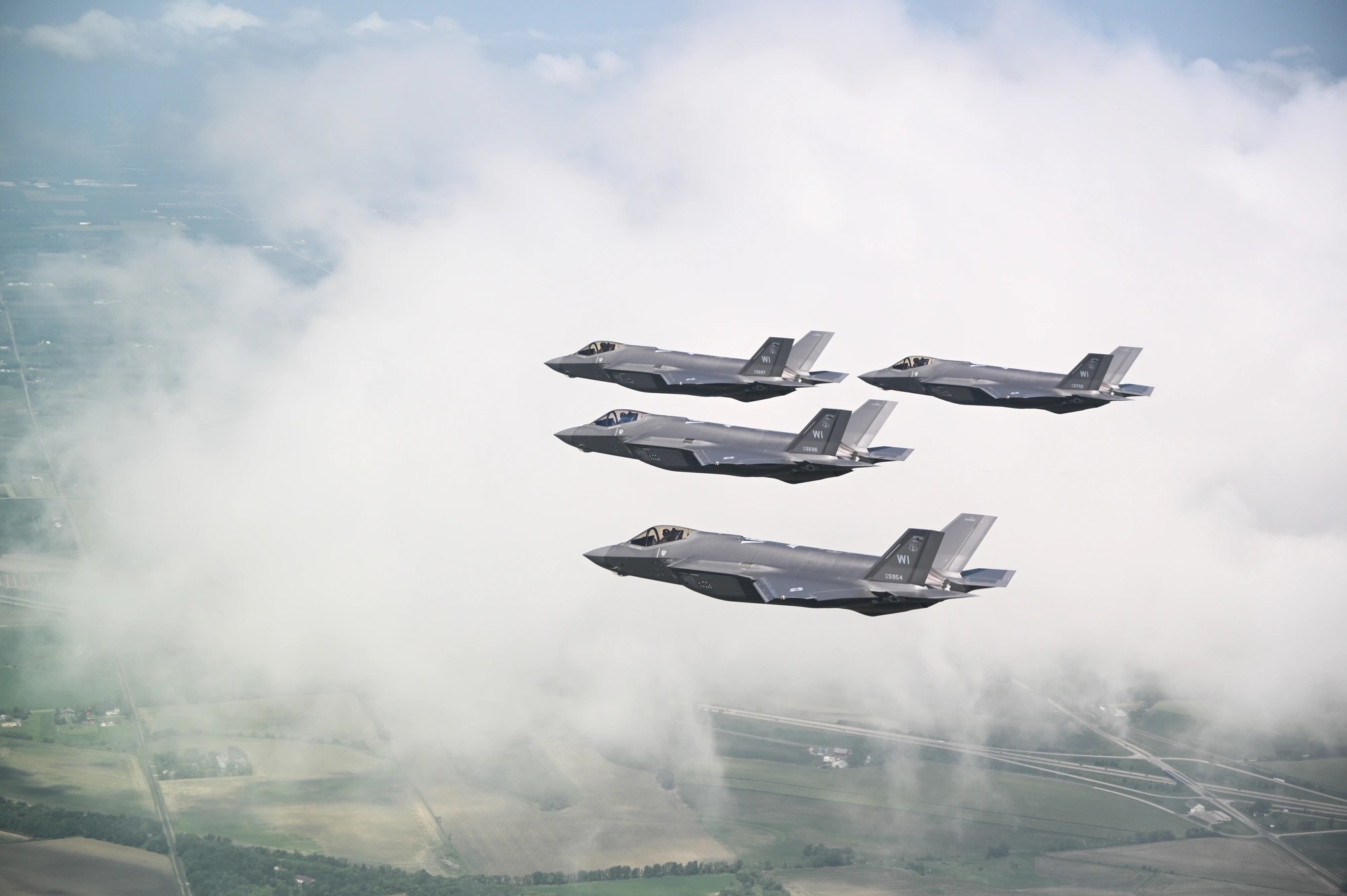
In the opening hours of 13 June 2025, Israeli strikes killed the leadership of the IRGC Aerospace Force — the organization that ran Iran’s strategic air defence and its long-range missile force. Over the next twenty-four hours, the Israeli Air Force flew nearly 200 sorties against 100 targets. By day four, air superiority over Iran was declared. On the video evidence, Iran’s air defences answered with anti-aircraft artillery; surface-to-air missiles were conspicuously absent, and the confirmed defensive tally for the entire war amounts to one drone and one cruise missile that probably malfunctioned en route. A centralized air-defence network, its command layer removed in the first hour, had stopped behaving like a system.
On the war’s twelfth and final night, Iran was still firing ballistic missiles.
Hold those two facts together, because between them sits a rule the past year has been teaching with unusual clarity. The post-2022 consensus held that decapitation fails. Russia opened its invasion of Ukraine with cyberattacks, information operations and assassination attempts intended to collapse the government in Kyiv, and manufactured instead a wartime president with the strongest political mandate in Europe. From that failure a general lesson was drawn: killing leaders does not work. The twelve days of June 2025 neither confirmed the lesson nor refuted it. They split it — into a sharper rule that has since survived a harder test than anyone should have wanted to run.
The system half and the society half
Operationally, decapitation worked, and worked at once. Iran’s strategic air defence was a centralized organization on the Soviet pattern: decisions flowed from the top, and when the top was gone, the system defaulted to silence. The evidence suggests the paralysis of the first days owed as much to the missing command layer as to the physical destruction of radars and launchers — the strikes themselves being the execution of target files built and held over the preceding months. The mechanism is organizational, not mystical: a network designed around a command node lost the node, and the network stopped making decisions. That is what a technical system does when its head is removed — not because the survivors are incompetent, but because centralization is a design choice with a known failure mode, and decapitation is that failure mode delivered deliberately.
Strategically, decapitation failed just as completely. The Islamic Republic did not collapse. It did not capitulate. It replaced its dead commanders within days, and across the twelve days it fired roughly 500 ballistic missiles at Israel — the last of them as the war ended. The state whose air defence had been silenced in an evening remained, as a polity, intact.
The second half should have surprised nobody, because beneath it sits one of the best-attested constants in the record of war: societies under bombardment harden. Punishment from the air converts fear into rage and hands the punished government a legitimacy it could not otherwise buy; populations expected to force their leaders to the table close ranks behind them instead. Jan Bloch derived the character of industrial war correctly before 1900 and concluded that societies could not endure it; they endured it for four years, twice. A century of air-power doctrine promised that reaching an enemy’s society was the same as breaking it, and the record kept declining the promise. Decapitation aimed at political collapse is the same wager on a smaller target: it assumes the political layer of a society is as brittle as the technical systems embedded in it. The evidence runs the other way. The political layer is the hardest structure in the record.
Then the rule was tested at maximum load. Operation Epic Fury, the second and broader campaign, opened on 28 February 2026 with strikes that reached the top of the state itself: Supreme Leader Ali Khamenei was killed in the opening hours. A successor was installed within days. Forty days into the campaign, the state that had lost its head accepted a ceasefire, not a capitulation — and was trading fire again by June, while hundreds of thousands filled the streets of Tehran for the state funeral in July. Decapitation at the level of a head of state returned the same reading on both halves: the systems beneath degraded, the society above closed ranks and fought on.
The control case
One polity of this era did fall in a day, and any honest version of the rule must survive it. In September 2023, Nagorno-Karabakh collapsed — the polity, not merely its army — with capitulation inside roughly twenty-four hours and more than 100,000 people leaving within a week. If a society can be made to fall that fast, does the societal half hold?
It holds, because Karabakh did not fall to decapitation. It fell to nine months of blockade: the Lachin corridor closed from December 2022 in defiance of ICJ orders, a Russian guarantee that had visibly stopped guaranteeing, a defence hollowed out since 2020. The full operational accounting of those months is still being written; the sequence — blockade first, collapse after — is not in dispute. A besieged, evacuable exclave is not a polity under bombardment; it is a population under blockade — and blockade, the oldest instrument in the inventory, is the one the rule never claimed to repeal. Societies do fall. They fall to siege and abandonment, not to the removal of their commanders. The exception draws the rule’s boundary instead of breaching it.
What would break the rule
A rule of this kind earns its keep by naming what would break it — the discipline an earlier essay on this site demanded of claims about the next war applies equally to claims drawn from the last one. The societal half breaks if a regime collapses within weeks of a pure decapitation campaign: leadership strikes without siege, blockade or a ground component doing the real work. No case in the record qualifies; the first one that does would falsify the rule, not qualify it. The systems half breaks more cheaply — it should fail wherever a decapitated technical system keeps functioning, which is what flat, devolved organizations are built to achieve; the rule is at bottom a claim about centralization, and it predicts its own weakening wherever command is distributed. And one flank stays open: whether hyperconnected, just-in-time societies harden as industrial ones did when the lights, the payments and the logistics fail together. Nothing in evidence answers that yet.
Two limits, stated plainly. Nothing here bears on whether such campaigns are lawful; that is a question of international law this essay leaves deliberately open. And nothing here says decapitation is useless: the system half is real, measurable and militarily consequential.
What the split forbids is the promise being sold on its back. A campaign offered as a route to regime change, capitulation or a short war is a promise of effect at the level where it has never occurred, priced on results from the level where it reliably does. The operational summary is short. An opening night can now decide who owns the sky. It has yet, anywhere in the record, to decide who governs — or when the missiles stop.